Shah Jongali
[quote about Jongali and Bonbibi meeting, shah jongali is a warrior but also shy/quiet, )


defense and reverence: relating to tigers
“It was often expressed that the government was happy as long as the tigers thrived, and that in contrast, whether the islanders lived or died, as had been the case for the refugees, made no difference, because they were just ‘tiger-food’. These measures – which were believed to reflect the government’s inherent conviction about tigers being more important than the fishers, honey-collectors and wood-cutters of the Sundarbans – were taken to be one of the more important reasons for tigers turning man-eaters. ‘After Morichjhanpi, tigers had become ‘arrogant’,’ I was often told… Now tigers were no longer the neighbours with whom the forest had to be shared but ‘state-property’, and backed by the ruling elite they had begun to treat the islanders as ‘tiger-food’. In a final show of desperate anger, the refugees had cut down the government plantation of coconut and tamarisk before leaving the island of Morichjhanpi: just as now, every time the islanders were angry with the representatives of the state they destroyed public property – cut down trees, broke solar lights and looted greedily from the various schemes launched by the government. “As we are treated as lesser beings, we act as is expected of them” said one of the islanders… The government devised ruses
to thwart the tiger’s predilection for human flesh… These were believed by the villagers to be baseless preventives because they did not address the real issue, which was that there were increasing numbers of people killed by tigers, because the existing means of livelihood was the only mechanisms the poorest could rely on for their subsistence. The current average is of 150 people killed per year by tigers and crocodiles in West Bengal alone.
Getting killed by a tiger in the Sundarbans in the 1980s was a terrifying prospect for family members, co-workers, even the entire village, of those who worked in the forest. The victim’s body had to be abandoned in the forest for fear that the forest officials would get to know about it. The new widow and the victim’s children were forbidden to cry and taught to say that their father had died of diarrhoea because if exposed, the family members were exhorted to pay for the dead trespasser, and were, in effect, treated like criminals.” (Jalais, “Dwelling on Morichjhanpi,” 1761)
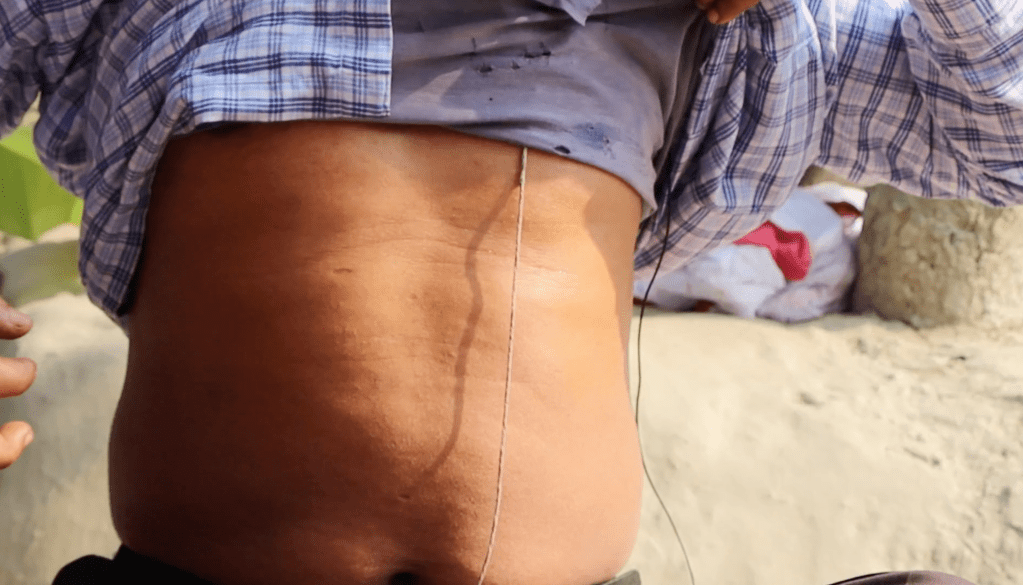
“As a result of concerted efforts under India’s “Project Tiger” initiative, the country is now
home to the most tigers in the world: 2,226, according to the official 2014 estimate. That is up 30% from 1,706 in 2010.
“We have been able to stop organized poaching and the animal has a sufficient prey base,” Mallick said. To keep them away from humans, “we try to barricade the villages with nylon nets or set up trap cages with live bait. Straying is a permanent issue.”
Hunting in the marshland is not easy for Sundarban tigers, so they see everything as prey even though humans are not their preferred food.
“Human beings are the easiest prey for the tigers when they come close to the animal,” he said.”
coexistence
“‘If tigers weren’t there, people would destroy the forest by cutting down all its trees to earn a living,” said Mahua Pramanik,
who is a mouli, or traditional wild honey collector, who used to travel into the forest with her family. “The environmental
balance would be destroyed and we would face even worse damage from the storms.’”
 RETOLD